

Mobile Shelving vs Static Racking
Every workshop, warehouse or archive eventually hits the same wall. The shelves are full, the aisles are cluttered, and teams are wasting time hunting for parts. The real question usually isn’t “do we need more storage?” but “are we using the space we already have in the best possible way?”
Mobile shelving can provide capacity you did not realise was there, but it is not always the right answer for every space or workflow.
This guide walks through the differences between static racking and mobile shelving, and shows you exactly when it makes sense to make the switch.
What is Static Racking?
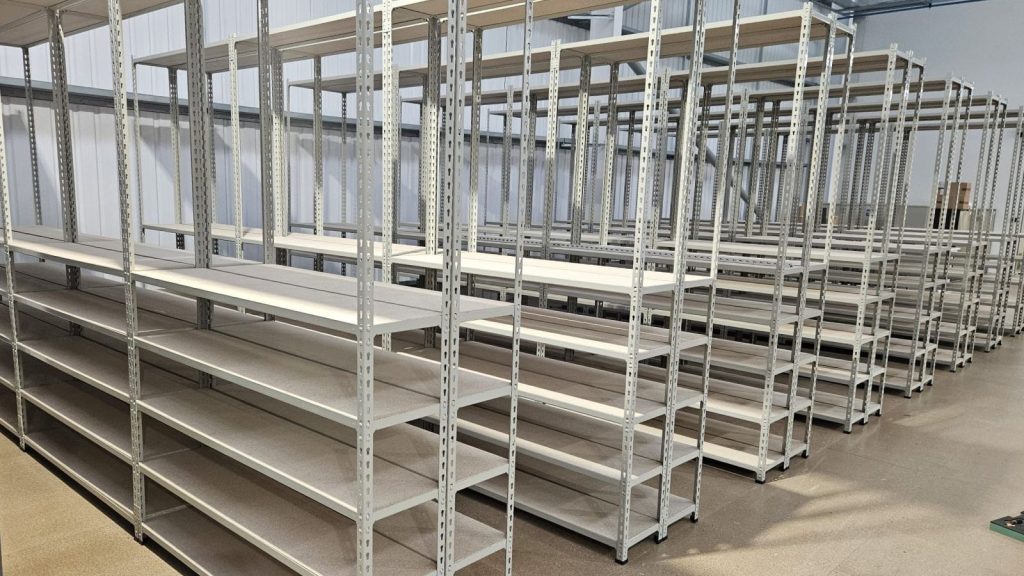
Static shelving (or racking) is the familiar, fixed system you will find in most workshops and storerooms. Units are positioned permanently with dedicated aisles between each run, creating a simple, robust and reliable layout that people instinctively understand and trust.
The upsides are clear: static racking offers straightforward installation, a lower upfront cost and easy day-to-day access from multiple aisles at once. For smaller workshops with consistent inventory, predictable workflows or high item turnover, it can be the ideal, no-fuss option.
The trade-off is space efficiency. Those fixed aisles make access simple, but they also lock in strips of dead space that can never be used for storage, meaning you may run out of capacity sooner than expected.
What Is Mobile Shelving?
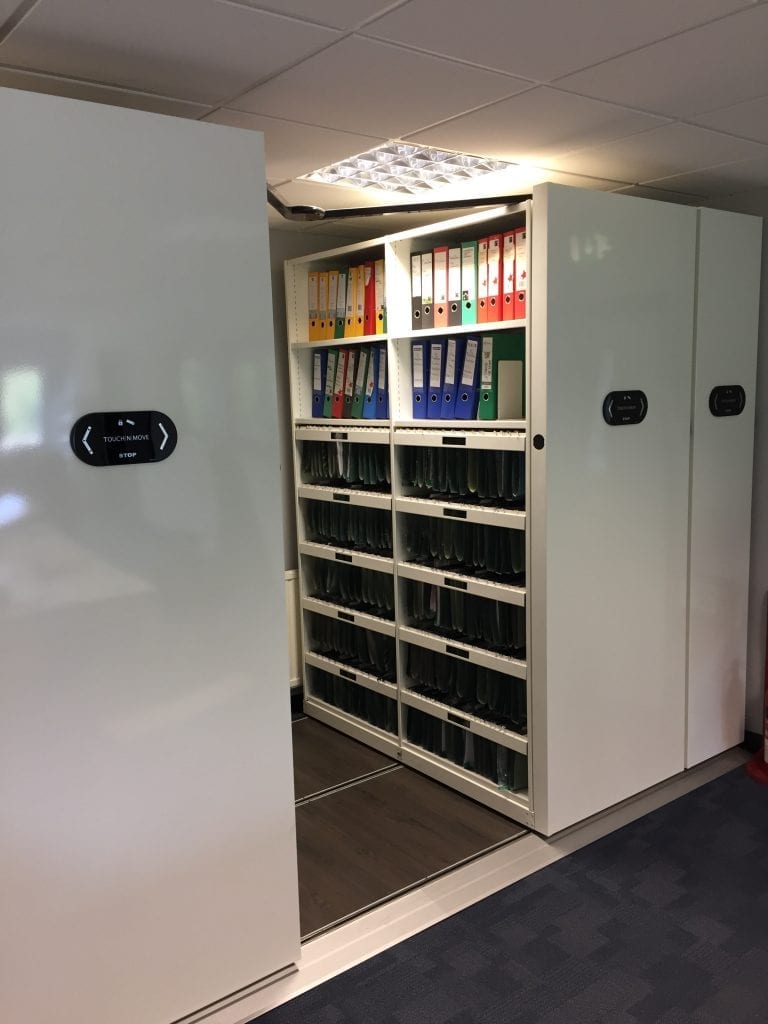
Mobile shelving, often called roller racking or high-density mobile storage, takes a smarter approach to the same storage challenge. Instead of staying fixed in place, shelving runs are mounted onto mobile bases or carriages that move smoothly along floor tracks, creating a compact “block” of storage.
Only one access aisle is needed at any given time. You simply slide the units apart where you want to work and keep the rest closed up, dramatically reducing the number of permanent aisles.
This design can increase usable capacity by up to around 60% compared to traditional static systems, which is transformative in space‑constrained environments.
Mobile systems can be operated manually, mechanically using hand cranks, or powered for larger and heavier installations, so movement stays controlled and safe even under heavy loads.
When to Choose Mobile Shelving Over Static Racking
Knowing when mobile shelving is the right investment depends on your space, workflow and longer‑term plans.
Here are the clearest signs that it is worth serious consideration:
1. Space Is at a Premium
If every square metre matters, particularly in urban or high‑rent locations, mobile shelving lets you reclaim space that fixed aisles currently waste.
By compacting shelves together and creating just one working aisle, you can significantly increase storage capacity without extending your building or sacrificing valuable floor area.
2. You Expect Growth or Change
Workshops and warehouses rarely stand still. New product lines, additional tooling or a rising number of projects all place pressure on storage.
Mobile systems are naturally scalable: you can add runs, build higher, or reconfigure layouts more easily than with conventional static racking, making them well-suited to organisations that expect inventory or operations to evolve.
3. Security and Control Matter
Where high‑value components, specialist tools or sensitive items are involved, security becomes part of the storage brief.
Mobile shelving can incorporate locking mechanisms and enclosed modules, allowing you to restrict access to certain bays or zones while keeping everything neat, professional and easy to audit.
4. Workflow Efficiency Needs a Boost
Even in tidy workshops, a surprising amount of time can be lost walking back and forth or searching for misplaced items. High‑density mobile systems support better zoning and clearer locations because everything lives in a defined, organised block.
Shorter walking distances, less visual clutter and logical layouts all add up to faster picks and smoother routines.
5. You Want to Future‑Proof Your Investment
Mobile shelving usually requires a higher initial spend than static racking, but the long‑term gains can be substantial. By squeezing more storage into the same footprint, you may be able to delay or avoid a move, an extension or external storage costs.
For many businesses, that improved space efficiency and flexibility delivers a stronger return on investment over the life of the system.

When Static Racking Still Makes Sense
Static racking is far from obsolete and remains the better choice in some environments. In smaller workshops, tool rooms, maintenance bays or teaching spaces where several people need to access different aisles at the same time, static shelving keeps everything open and immediately reachable.
It is also well-suited to areas with high item turnover and frequent, casual access. For example, a busy maintenance store or a retail back‑of‑house where speed of access is more important than maximising density.
In these situations, the combination of lower upfront cost, quick installation and multi‑user access can outweigh the benefits of a compact mobile system.
In many facilities, the most effective approach blends both. Static racking handles fast‑moving, frequently accessed items, while mobile shelving looks after bulk stock, archive material or slower‑moving lines. The result is a balanced setup that supports both speed and space optimisation.
Key Considerations Before Choosing
Before committing to either system, it pays to step back and look at the bigger picture of how your space really works:
- Available space – Measure carefully, including ceiling height and access points. Mobile systems require tracks, clearances and consideration of how the units will move in relation to doors, columns and equipment.
- Load capacity – Check what you need to store now and in the future. Heavy-duty systems are essential in engineering and manufacturing environments where dense tooling, components or fixtures are the norm.
- User access – Think about how many people need to use the storage at once, and whether peaks in activity could create bottlenecks if only one mobile aisle is open at a time.
- Budget and timeline – Balance upfront cost against long‑term efficiency, potential space savings and any disruption during installation.
- Future potential – Consider whether your layout may need to change, and how easily each system will adapt if you add new processes, machines or storage zones.
Mobile Shelving and Static Racking From Polstore
A well‑designed shelving system can free valuable floor space, shorten walking distances, keep critical items close to hand and reduce everyday risks from cluttered aisles or over‑stacked shelves.
At Polstore, we work closely with clients across engineering, education, heritage, military, automotive, and wider industrial sectors to design storage around real workflows. From initial survey and planning through to design, installation and aftercare, each project is tailored to the space, the stock and the people using it every day.
If you’re weighing up mobile shelving versus static racking, or suspect the right answer might be a blend of both, our team can help you make a confident, informed choice.
Contact Polstore today on +44 800 008 6861 or complete the enquiry form to discuss mobile shelving, static racking and other workshop storage solutions for your space.
Polstore Storage Systems is committed to providing high-quality, customised solutions for all your storage needs. Transform your workspace today with our expert services.
Related Guides:
- What is Mobile Shelving?
- 5 Workshop Storage Ideas to Organise Your Space
- How to Effectively Store Engineering Workshop Equipment
- 4 Reasons Why You Should Invest in Tool Control
- How to Set Up a Workshop